
Research Use Only / Third-Party Analytical Testing / Per-Batch Documentation / Materials Shipped from the USA
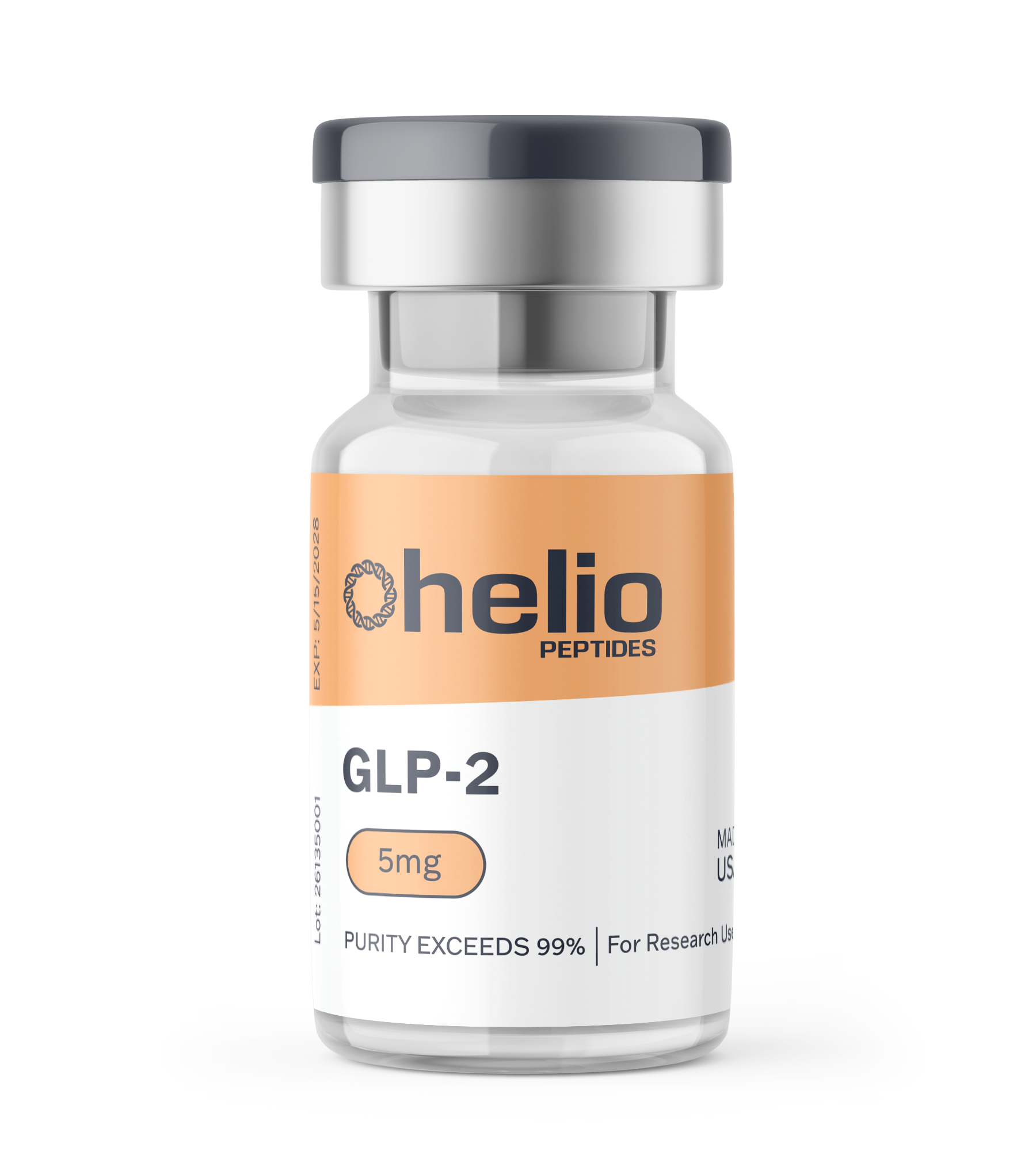
GLP-2 research material
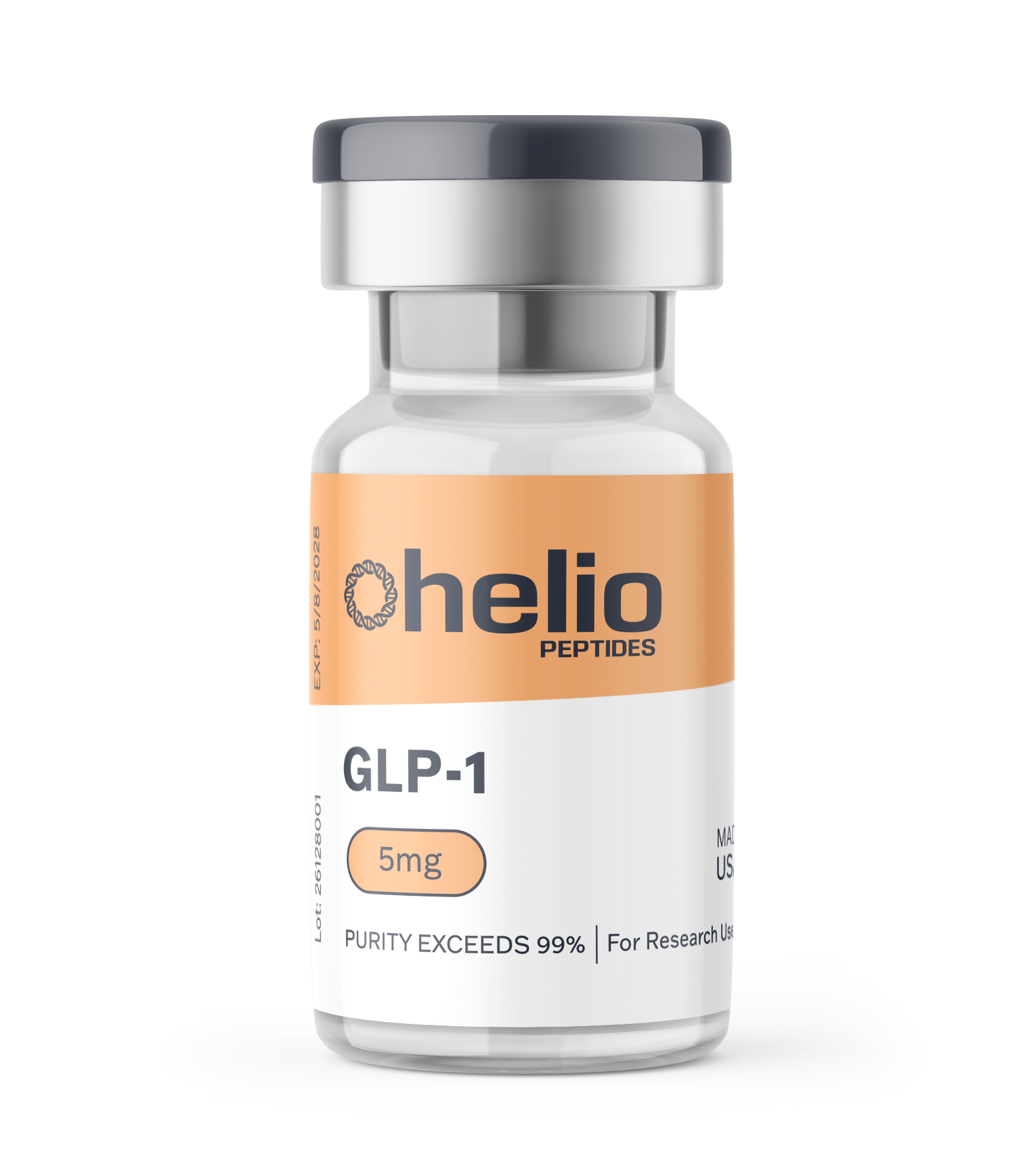
Vial · Research materialHelio®
Metabolic Research

GLP-2

GLP-2 (1-33) is the native human form of glucagon-like peptide-2, a 33-amino-acid intestinotrophic peptide derived, like GLP-1, from post-translational processing of proglucagon in intestinal L-cells. In experimental systems it acts as an endogenous agonist of the glucagon-like peptide-2 receptor (GLP-2R), a class B G-protein-coupled receptor expressed predominantly in the gastrointestinal tract. Because "GLP-2" is a generic class designation, laboratory reference material typically corresponds to the native human GLP-2 (1-33) sequence.

In preclinical and in-vitro research, GLP-2 (1-33) has been studied as a regulator of intestinal epithelial biology, including models of crypt-cell proliferation, mucosal growth, and barrier function. Native GLP-2 is a substrate for dipeptidyl peptidase-4 (DPP-4), which cleaves its N-terminus and limits its duration of activity, a property central to studies underpinning DPP-4-resistant analogs such as teduglutide. This material is supplied strictly for Research Use Only.

Identification
  • MaterialGLP-2
  • Research AreaMetabolic
  • PresentationVial
  • Available Sizes5mg · 10mg
  • CAS Number223460-79-5
  • Molecular FormulaC165H254N44O55S
  • Molecular Weight3766.1 g/mol
  • TypeLinear peptide (proglucagon-derived)
  • Receptor / TargetGlucagon-like peptide-2 receptor (GLP-2R)
Amino Acid Sequence

HADGSFSDEMNTILDNLAARDFINWLIQTKITD

Analytical Data
  • Purity (HPLC)≥99%
  • Identity (MS)Confirmed to specification
  • TestingAccredited (ISO 17025) third-party laboratory
  • CertificateView COA · Lot 26135001 →
From$74.95 – $99.95

Research use only — not for human or animal consumption. Per-batch documentation is provided with the material.

Key Characteristics
Molecular FormulaC165H254N44O55S
Molecular Weight3766.1 g/mol
CAS Number223460-79-5
SequenceHADGSFSDEMNTILDNLAARDFINWLIQTKITD
Receptor / TargetGlucagon-like peptide-2 receptor (GLP-2R)
Molecular TypeLinear 33-residue peptide
FormLyophilized powder in vial
SolubilitySoluble in water and bacteriostatic water; aliquot after reconstitution
StorageStore lyophilized at -20 C to -80 C; protect from light
StabilityLyophilized stable for extended periods frozen; reconstituted solutions less stable, use promptly
Research Context
Intestinal epithelial biologyReference ligand for studies of crypt-cell proliferation and mucosal growth in-vitro and in preclinical models.
GLP-2 receptor pharmacologyNative agonist used to characterize GLP-2R binding and cAMP-coupled signaling.
Barrier and gut-trophic researchModel peptide for intestinal barrier function and adaptation studies.
DPP-4 substrate studiesNative peptide used to characterize enzymatic cleavage and half-life relevant to analog design.
Research Findings

In vitro and preclinical studies describe GLP-2 (1-33) as a selective agonist of the GLP-2 receptor that has been associated with intestinal epithelial proliferation and mucosal growth in animal and cell-based models. Research has also documented rapid N-terminal inactivation of native GLP-2 by DPP-4, which motivated the design of degradation-resistant analogs.

These observations derive from experimental and in-vitro settings and are provided for scientific context only. No human efficacy, dosing, or therapeutic conclusions are implied.

History

Glucagon-like peptide-2 was identified in the 1990s as a proglucagon-derived peptide with intestinotrophic activity, characterized notably by Drucker and colleagues, who demonstrated its role in promoting intestinal growth. This work led directly to the development of the DPP-4-resistant analog teduglutide for short bowel syndrome.

References
  1. Drucker DJ, Erlich P, Asa SL, Brubaker PL (1996). Induction of intestinal epithelial proliferation by glucagon-like peptide 2. Proceedings of the National Academy of Sciences.
  2. Munroe DG, et al. (1999). Prototypic G protein-coupled receptor for the intestinotrophic factor glucagon-like peptide 2. Proceedings of the National Academy of Sciences.
  3. Drucker DJ, Yusta B (2014). Physiology and pharmacology of the enteroendocrine hormone glucagon-like peptide-2. Annual Review of Physiology.

Cited literature refers to laboratory and preclinical research. GLP-2 is supplied strictly for research use only and is not intended to diagnose, treat, cure, or prevent any disease.
Why researchers choose Helio
99%+ PurityHPLC-verified every batch
Accredited TestingIndependent ISO 17025 laboratory
Per-Batch COADocumentation tied to your lot
Made in the USADiscreet, protected shipping
Related

More in Metabolic

View area