
Research Use Only / Third-Party Analytical Testing / Per-Batch Documentation / Materials Shipped from the USA
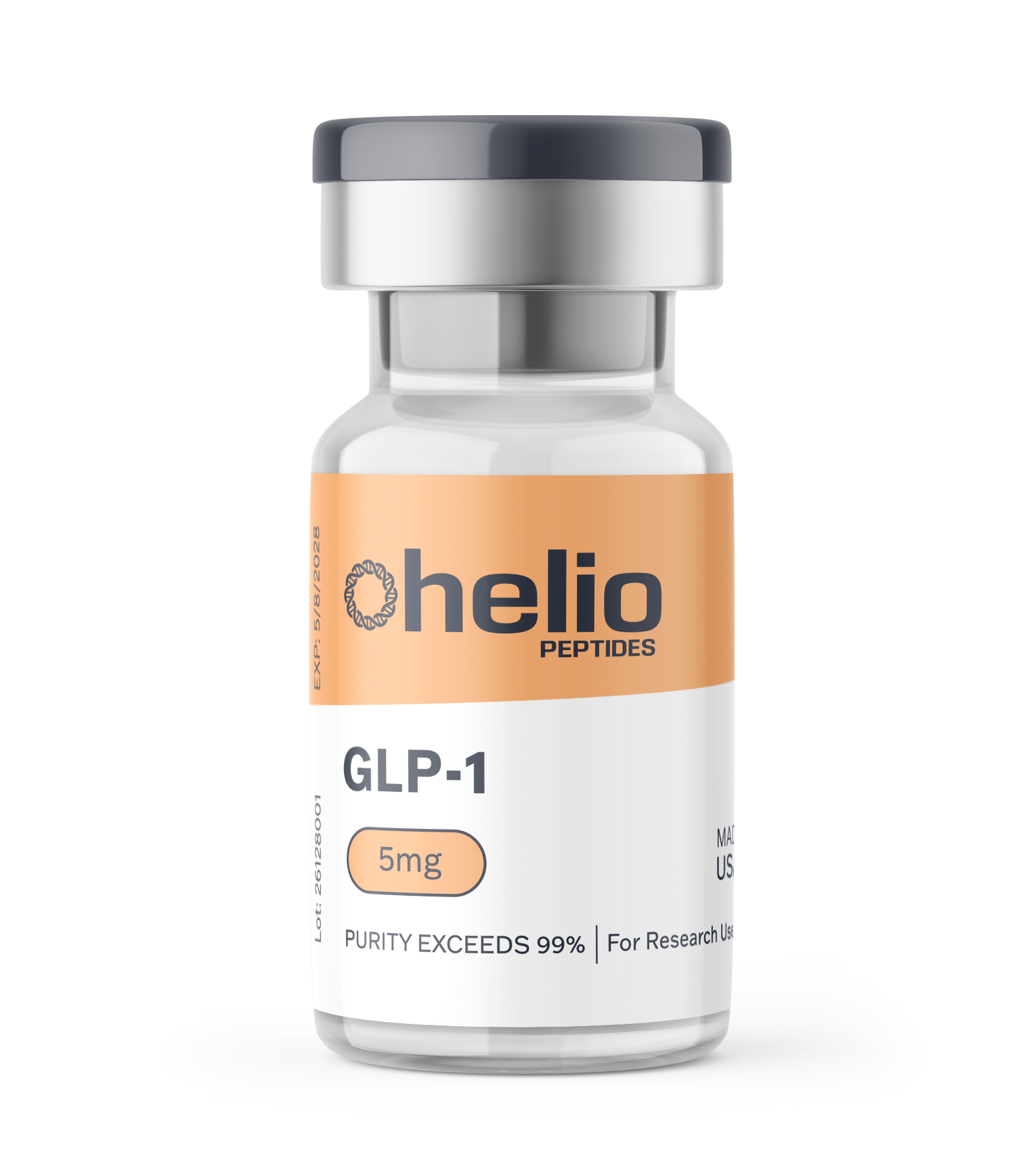
GLP-1 research material
Vial · Research materialHelio®
Metabolic Research

GLP-1

GLP-1 (7-37) is the fully processed, biologically active form of glucagon-like peptide-1, a 30-amino-acid incretin hormone derived from the proglucagon gene and secreted by intestinal L-cells. In experimental systems it is characterized as an endogenous agonist of the glucagon-like peptide-1 receptor (GLP-1R), a class B G-protein-coupled receptor. Because "GLP-1" is a generic class designation rather than a single proprietary molecule, laboratory reference material most commonly corresponds to the native GLP-1 (7-37) or GLP-1 (7-36) amide sequence.

In preclinical and in-vitro research, GLP-1 (7-37) has been widely used as a model incretin ligand to probe receptor pharmacology, cyclic-AMP signaling, and glucose-dependent insulinotropic pathways in pancreatic islet and cell-line systems. Native GLP-1 is rapidly cleaved by dipeptidyl peptidase-4 (DPP-4), a property that has made it a foundational reference compound in studies of peptide stability and in the design of longer-acting GLP-1R agonists. This material is supplied strictly for Research Use Only.

Identification
  • MaterialGLP-1
  • Research AreaMetabolic
  • PresentationVial
  • Available Sizes5mg · 10mg
  • CAS Number106612-94-6
  • Molecular FormulaC151H228N40O47
  • Molecular Weight3355.71 g/mol
  • TypeLinear peptide (incretin hormone)
  • Receptor / TargetGlucagon-like peptide-1 receptor (GLP-1R)
  • PubChem CID44290899 →
Amino Acid Sequence

HAEGTFTSDVSSYLEGQAAKEFIAWLVKGR

Analytical Data
  • Purity (HPLC)≥99%
  • Identity (MS)Confirmed to specification
  • TestingAccredited (ISO 17025) third-party laboratory
  • DocumentationPer-batch COA →
From$64.99 – $69.95

Research use only — not for human or animal consumption. Per-batch documentation is provided with the material.

Key Characteristics
Molecular FormulaC151H228N40O47
Molecular Weight3355.71 g/mol
CAS Number106612-94-6
PubChem CID44290899
SequenceHAEGTFTSDVSSYLEGQAAKEFIAWLVKGR
Receptor / TargetGlucagon-like peptide-1 receptor (GLP-1R)
Molecular TypeLinear 30-residue peptide
FormLyophilized powder in vial
SolubilitySoluble in water and bacteriostatic water; aliquot after reconstitution
StorageStore lyophilized at -20 C to -80 C; protect from light
StabilityLyophilized stable for extended periods frozen; reconstituted solutions less stable, use promptly
Research Context
Incretin receptor pharmacologyReference ligand for GLP-1R binding, activation, and cAMP-coupled signaling studies.
Glucose-dependent insulin secretionModel peptide for in-vitro islet and beta-cell insulinotropic pathway research.
Peptide stability / DPP-4 studiesNative substrate used to characterize dipeptidyl peptidase-4 cleavage and half-life.
Analog and formulation developmentStructural template underlying design of longer-acting GLP-1R agonists.
Research Findings

In vitro and preclinical studies describe GLP-1 (7-37) as a high-affinity agonist of the GLP-1 receptor that stimulates adenylate-cyclase and cAMP accumulation, effects that have been used to characterize glucose-dependent insulinotropic activity in pancreatic islet and transfected cell-line models. Investigations have also documented the rapid inactivation of native GLP-1 by DPP-4 through cleavage of the N-terminal His-Ala dipeptide.

These observations are drawn from experimental and in-vitro settings and are provided for scientific context only. No human efficacy, dosing, or therapeutic conclusions are implied.

History

Glucagon-like peptide-1 was identified in the 1980s following the cloning of the proglucagon gene, and the truncated GLP-1 (7-37) and GLP-1 (7-36) amide forms were subsequently established as the active incretin species by Orskov, Holst, and colleagues. This work laid the biochemical foundation for the incretin field and the later development of GLP-1 receptor agonists and DPP-4 inhibitors.

References
  1. Orskov C, Holst JJ, et al. (1989). Complete sequences of glucagon-like peptide-1 from human and pig small intestine. Journal of Biological Chemistry.
  2. Mojsov S, Weir GC, Habener JF (1987). Insulinotropin: glucagon-like peptide I (7-37) co-encoded in the glucagon gene is a potent stimulator of insulin release in the perfused rat pancreas. Journal of Clinical Investigation.
  3. Holst JJ (2007). The physiology of glucagon-like peptide 1. Physiological Reviews.

View compound profile on NIH PubChem →

Cited literature refers to laboratory and preclinical research. GLP-1 is supplied strictly for research use only and is not intended to diagnose, treat, cure, or prevent any disease.
Why researchers choose Helio
99%+ PurityHPLC-verified every batch
Accredited TestingIndependent ISO 17025 laboratory
Per-Batch COADocumentation tied to your lot
Made in the USADiscreet, protected shipping
Related

More in Metabolic

View area