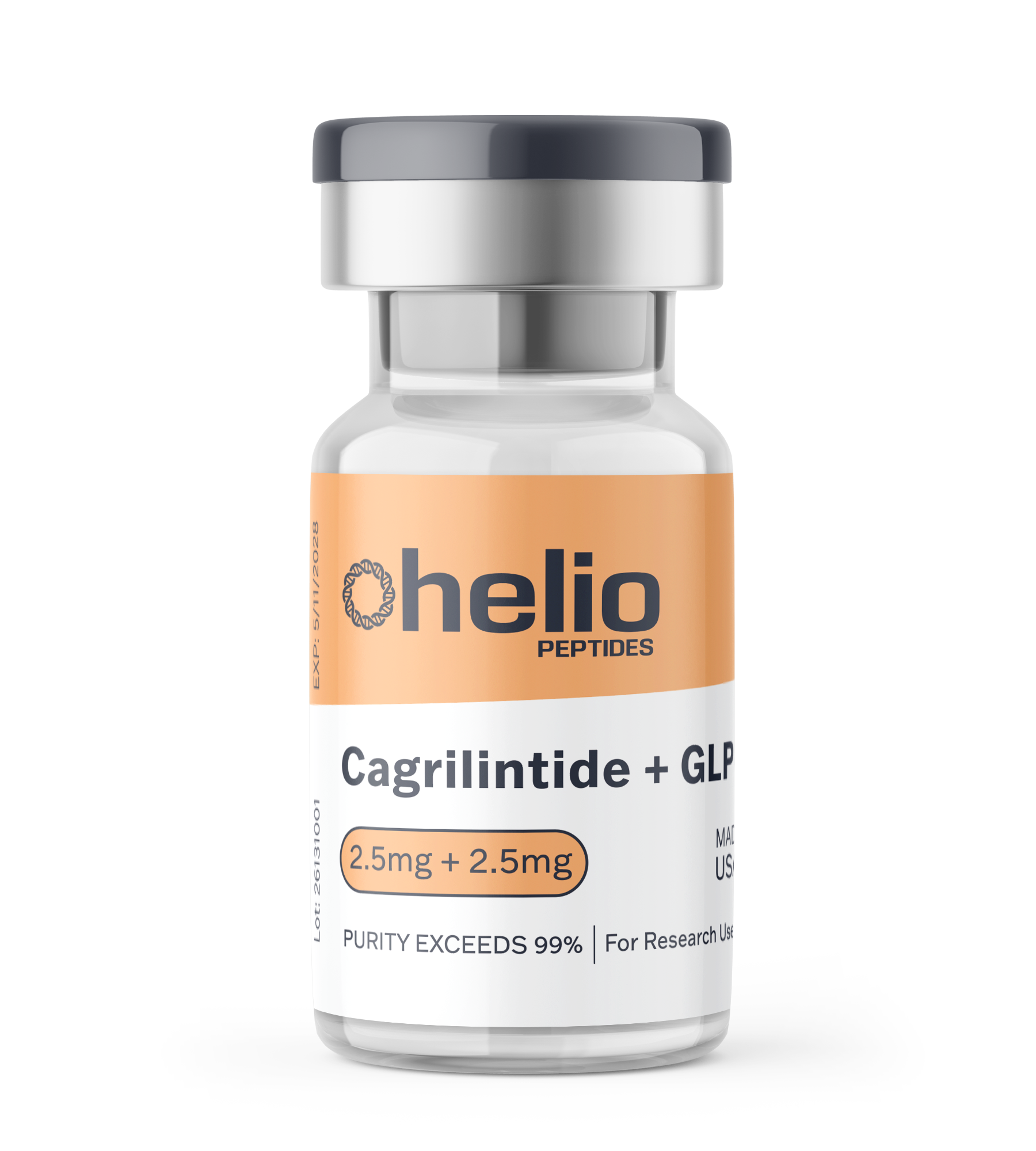

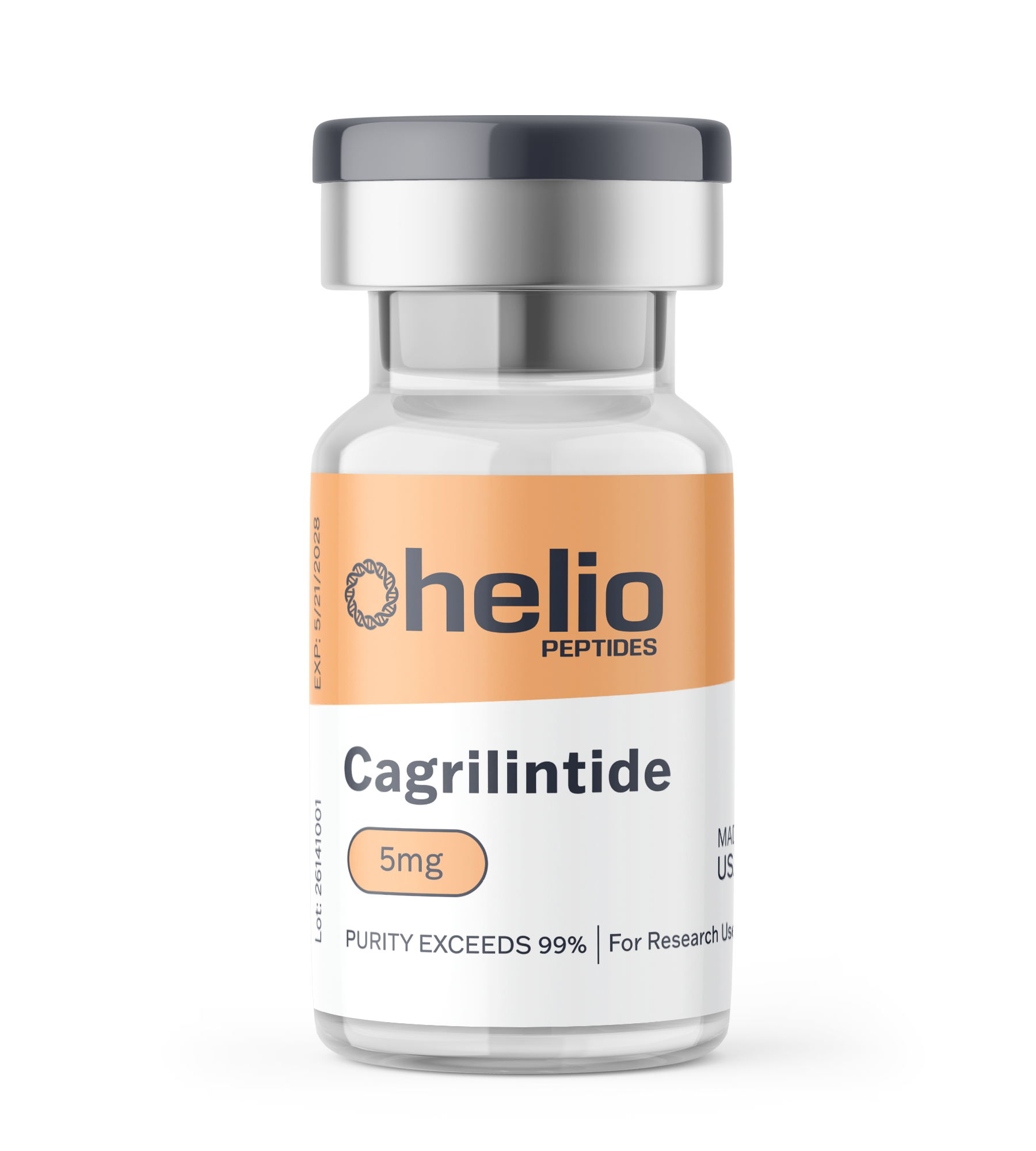
Cagrilintide (development code AM833) is a synthetic, long-acting amylin analog built on a 37-amino-acid pramlintide-like backbone with key substitutions and N-terminal fatty-diacid acylation via a gamma-glutamic acid linker. It contains an intramolecular disulfide bridge (Cys2-Cys7) and a C-terminal amide. In experimental systems it acts as a non-selective agonist of the amylin receptor family (AMY1-3) and the calcitonin receptor, with reported subpicomolar to picomolar binding affinities.
In preclinical and in-vitro research, cagrilintide has been studied for its prolonged receptor engagement relative to native amylin, and as a co-administration partner with GLP-1 receptor agonists in models of energy balance and food intake. Its acylation-based design confers extended circulating half-life, making it a reference amylin-class research peptide. This material is supplied strictly for Research Use Only.
(Eicosanedioic acid-γ-Glu)-KCNTATCATQRLAEFLRHSSNNFGPILPPTNVGSNTP-NH2 (Cys2-Cys7 disulfide)
Research use only — not for human or animal consumption. Per-batch documentation is provided with the material.
Preclinical and early clinical-pharmacology research characterizes cagrilintide as a long-acting amylin analog with potent activity at amylin and calcitonin receptors and a markedly extended duration of action compared with native amylin. Studies have examined its effects on food intake and body weight in animal models and its combination with GLP-1 receptor agonists.
These observations derive from experimental and preclinical settings and are provided for scientific context only. No human efficacy, dosing, or therapeutic conclusions are implied by this listing.
Cagrilintide (AM833) was developed by Novo Nordisk as a long-acting amylin analog, extending the amylin-pharmacology field established by the earlier analog pramlintide. Its discovery and early pharmacology were reported by Kruse and colleagues, and it has since been studied both alone and in fixed combination with the GLP-1 agonist semaglutide (CagriSema).
View compound profile on NIH PubChem →
Cited literature refers to laboratory and preclinical research. Cagrilintide is supplied strictly for research use only and is not intended to diagnose, treat, cure, or prevent any disease.