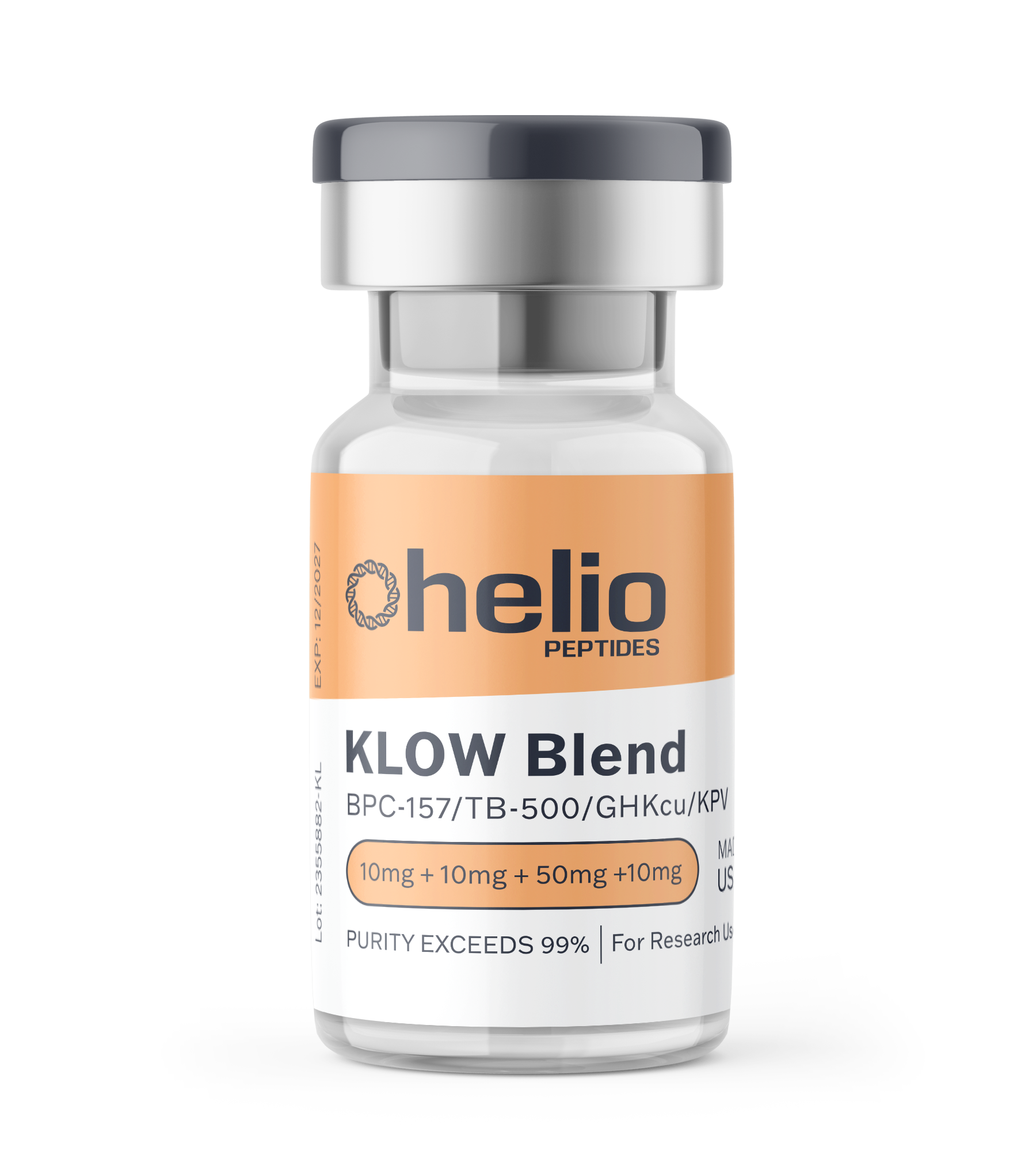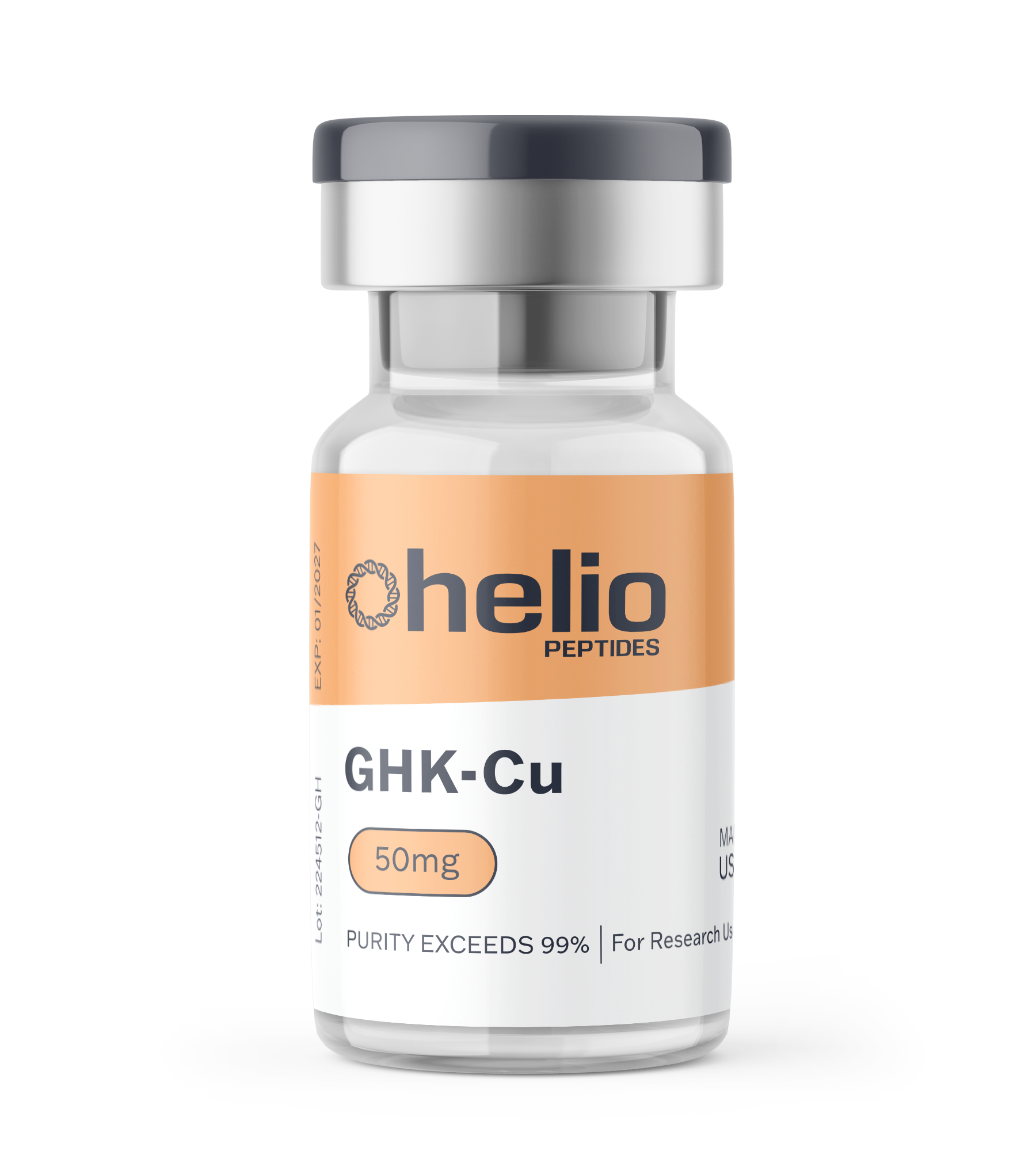

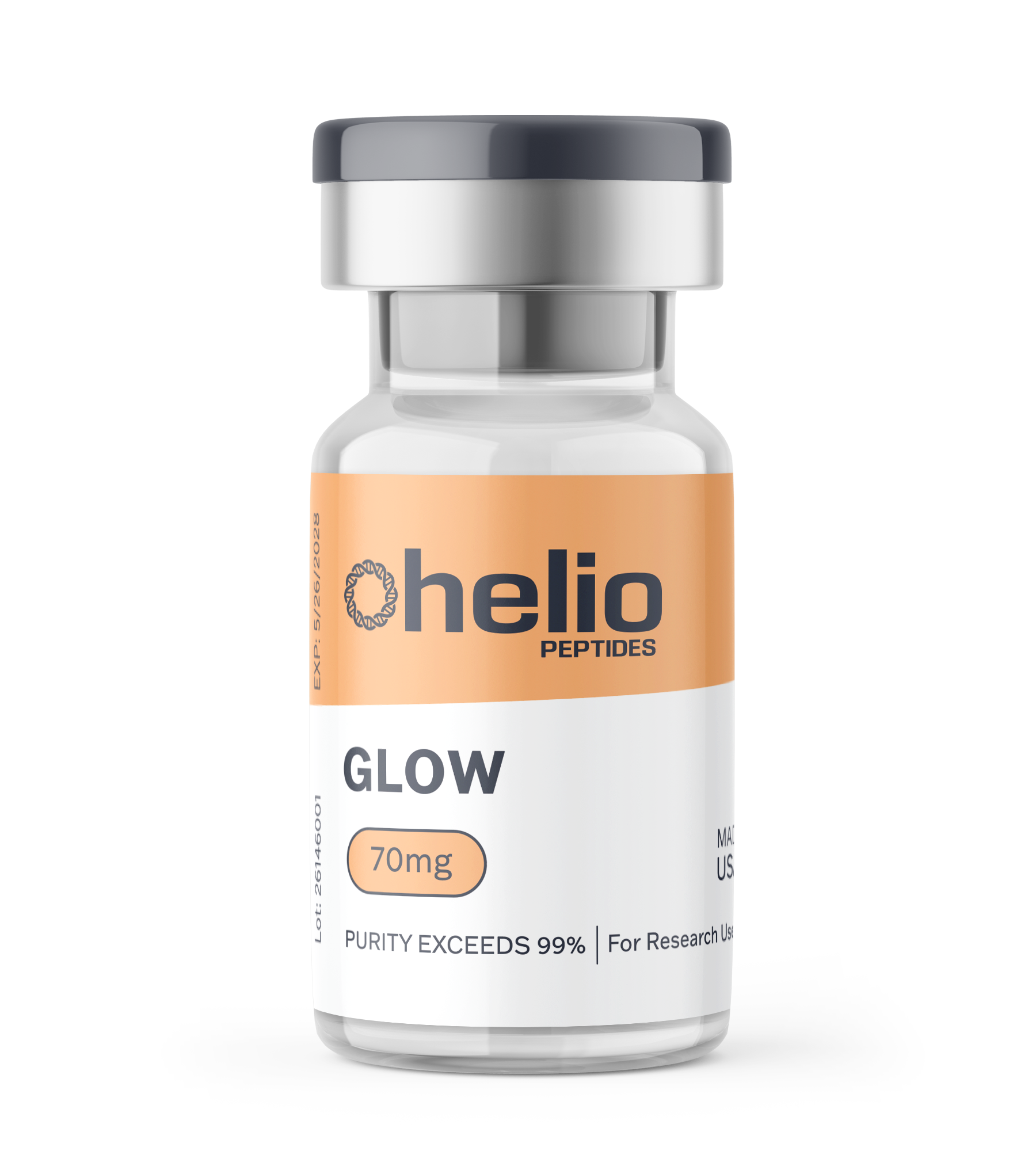
GLOW Blend is a three-component research formulation combining GHK-Cu (Copper Tripeptide-1), BPC-157 (a gastric pentadecapeptide), and TB-500 (an N-terminally acetylated fragment of Thymosin Beta-4) in a single lyophilized vial. The 70mg presentation is commonly formulated at a 50mg / 10mg / 10mg ratio of GHK-Cu, BPC-157, and TB-500. Each component is a distinct, independently characterized research peptide, catalogued below in the component profiles.
The blend is studied as a convenience preparation for laboratory programs that examine tissue-repair, angiogenesis, and extracellular-matrix pathways in parallel. It is supplied as a freeze-dried powder for reconstitution and is intended strictly for in vitro and preclinical Research Use Only. It is not for human or veterinary use.
Multi-component blend (see profiles)
Research use only — not for human or animal consumption. Per-batch documentation is provided with the material.
As a blend, GLOW has no single published characterization; the research literature exists at the individual-component level. GHK-Cu is studied for extracellular-matrix and copper-signaling effects, BPC-157 for nitric-oxide and angiogenic pathway modulation in rodent tissue-repair models, and TB-500 for actin-binding and cell-migration activity derived from Thymosin Beta-4 biology.
Researchers select the combined vial to run parallel investigations across these overlapping repair-associated pathways. All reported activity is preclinical and experimental, with no human efficacy conclusions.
GLOW is a market-defined research blend that assembles three previously characterized peptides, GHK-Cu (identified in the 1970s), BPC-157 (derived from gastric-juice protein studies), and TB-500 (a Thymosin Beta-4 fragment), into a single lyophilized preparation for combined laboratory study.
Cited literature refers to laboratory and preclinical research. GLOW Blend is supplied strictly for research use only and is not intended to diagnose, treat, cure, or prevent any disease.